
💡这项突破是什么?
Fig. 2 – Chloroplast development and photosynthetic efficiency in wild-type and lmi1 mutant. (A–C) Scanning electron microscopic observation of wild-type with fold changes of 200 ×, 500 ×, 3000 ×, scale bar, 200 μm, 100 μm, 10 μm. (D–F) Scanning electron microscopic observation of lmi1 with fold changes of 200 ×, 500 ×, 3000 ×, scale bar, 200 μm, 100 μm, 10 μm. (G) SPAD values. (H) Chlorophyll content. (I) Photosynthetic efficiency. (J–K) Chloroplast ultrastructure of wild-type. Scale bar, 20 μm, 1 μm. (L–M) Chloroplast ultrastructure of lmi1. Scale bar, 20 μm, 1 μm. (N) Chlorophyll synthesis related genes expression. (O) Chloroplast development related gene expression. *, P < 0.05; **, P < 0.01 (t-test). C, chloroplast; Thy, thylakoid; Og, osmophilic gramules; Sg, starch granule; N, nucleus.
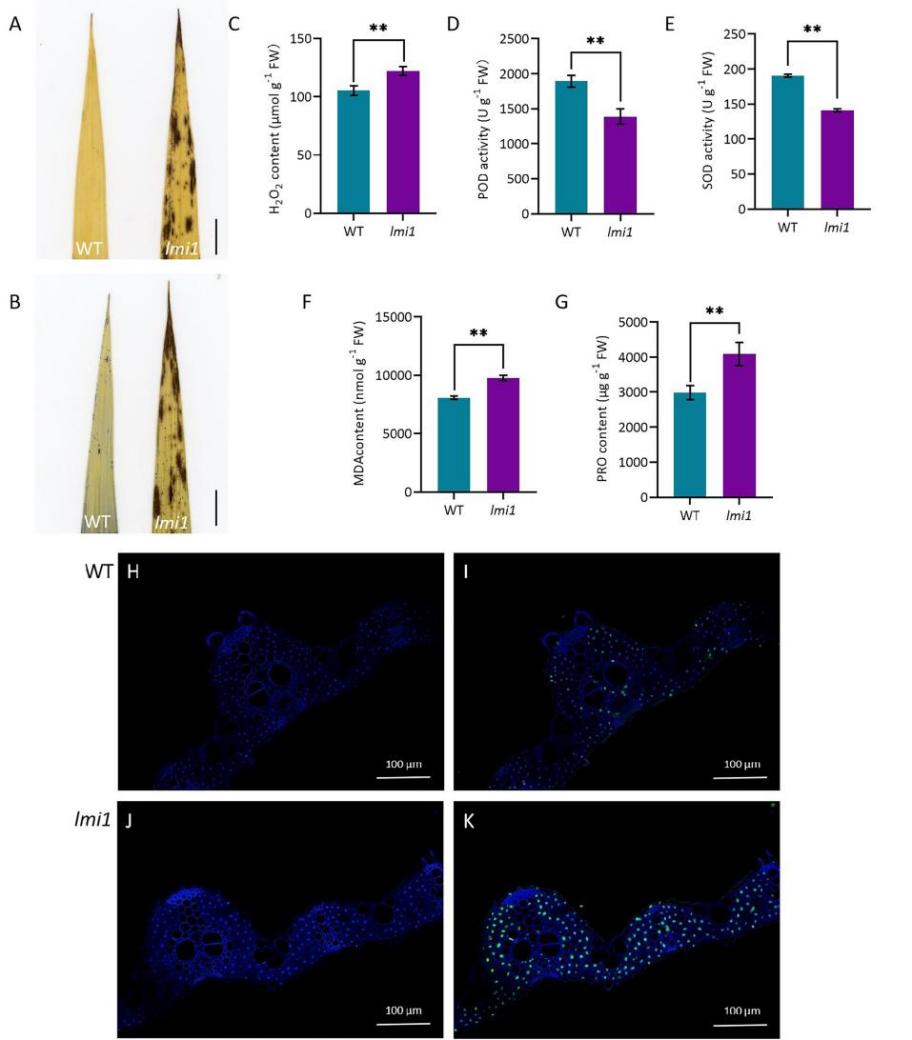
Fig. 3 – Physiological and biochemical analysis of wild-type and lmi1 mutant. (A) DAB staining. Scale bar, 1 cm. (B) NBT staining Scale bar, 1 cm. (C) H2O2 content. (D) POD activity. (E) SOD activity. (F) MDA content. (G) PRO content. (H–I) TUNEL plots of wild-type. Scale bar, 100 μm. (J–K) TUNEL plots of lmi1. Scale bar, 100 μm. *, P < 0.05; **, P < 0.01 (t-test).
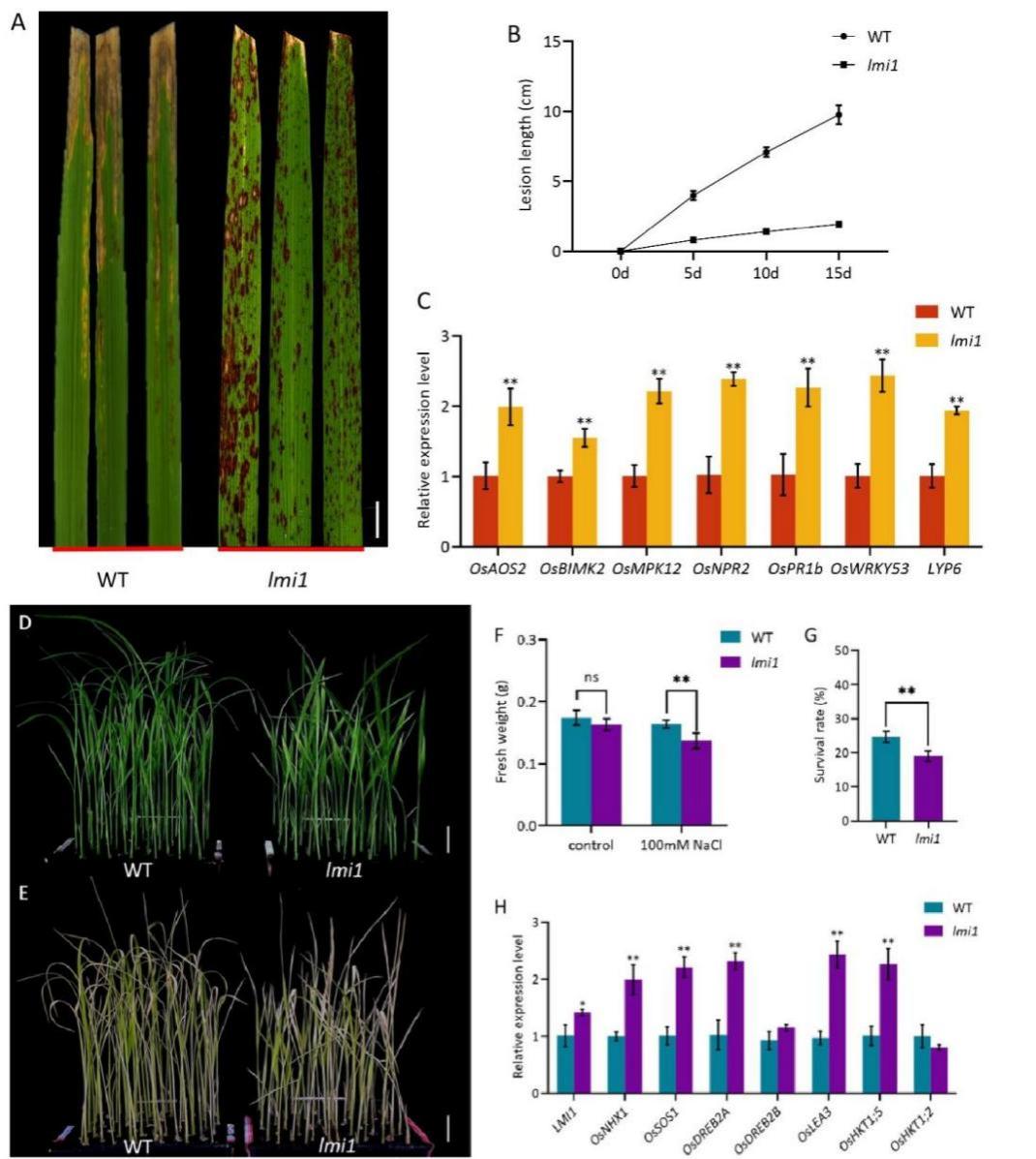
Fig. 4 – LMI1 regulates defense responses in rice. (A) Phenotypes of wild-type and lmi1 were observed 15 d after inoculation, scale bar, 1 cm. (B) Statistical results of bacterial blight spot length on 0, 5, 10 and 15 d after inoculation. (C) Defense related genes expression. *, P < 0.05; **, P < 0.01 (t-test).
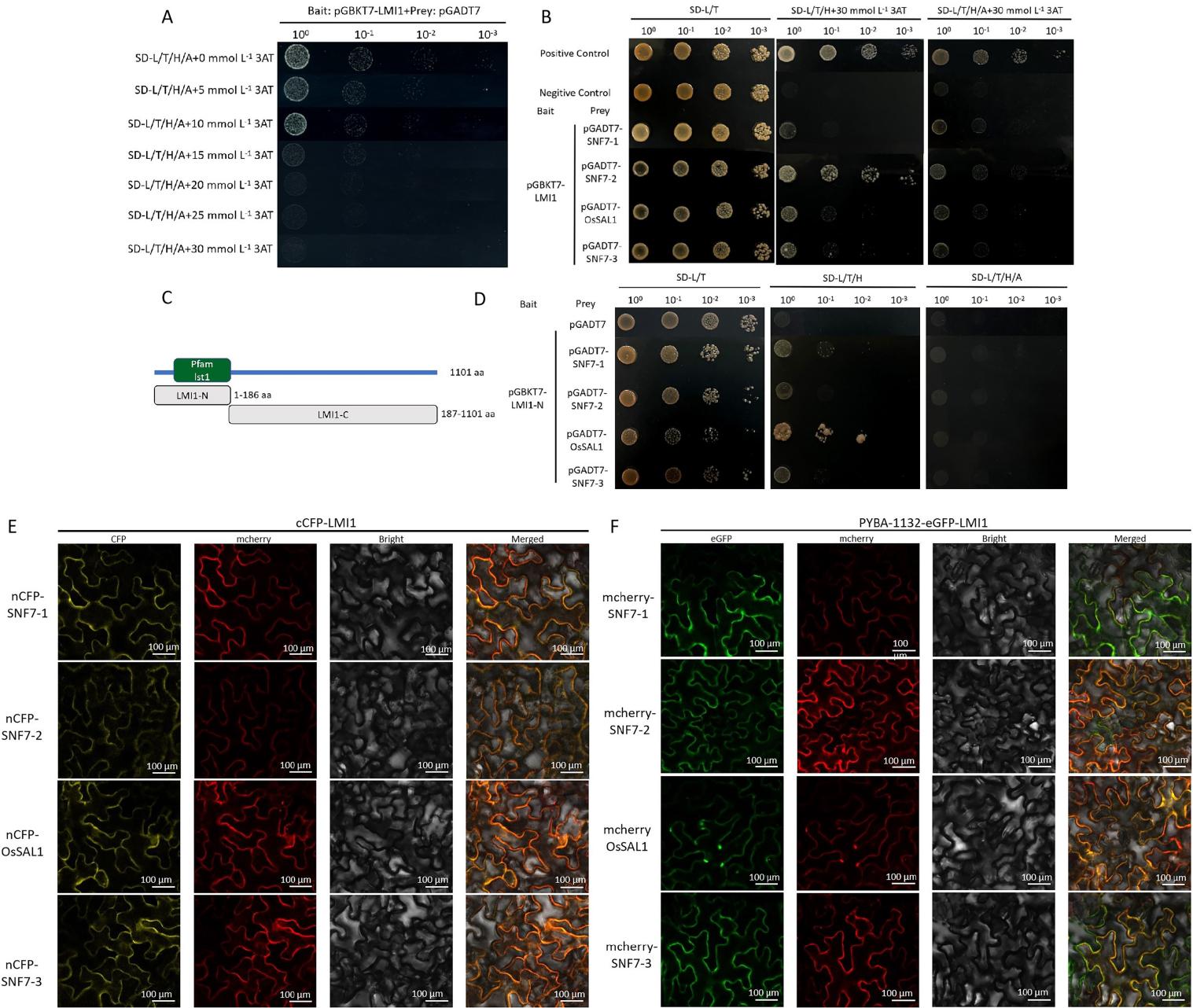
Fig. 5 – LMI1 interacts with phosphatase and components of ESCRT-III complex. (A) Validation and inhibition of LMI1 yeast bait autoactivation. (B) The yeast two-hybrid interaction analysis of LMI1 with 30 mmol L-1 3AT. (C) Schematic representation of the Pfam domain truncation of the LMI1 protein. (D) LMI1-N truncated yeast two-hybrid interaction verification analysis. (E) Verification of LMI1 BiFC, scale bar, 100 μm. (F) Gene co-localization verification of LMI1. Scale bar, 100 μm. Note: SD-L/T represented two-deficient solid medium lacking leucine (Leu) and tryptophan (Trp). SD-L/T/H represents triple deficient solid medium lacking leucine (Leu), tryptophan (Trp) and histidine (His). SD-L/T/H/A represents a four-deficient solid medium lacking leucine (Leu), tryptophan (Trp), histidine (His) and adenine (Ade).
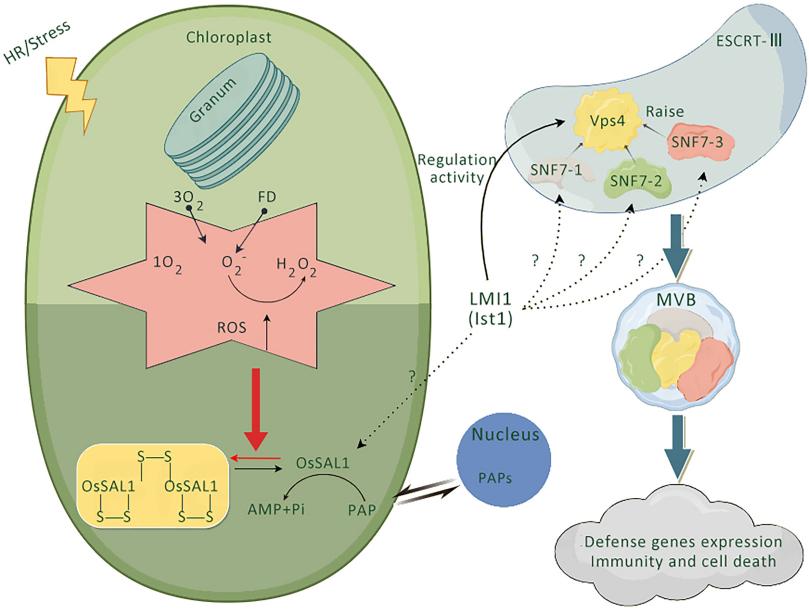
Fig. 6 – Possible pathways by which LMI1 regulates disease resistance immune responses and cell death.
本研究成果第一作者为浙江师范大学生命科学学院硕士研究生殷文晶(已毕业,目前在华中农业大学作物遗传改良全国重点实验室、湖北洪山实验室攻读博士学位),浙江师范大学饶玉春教授、中国水稻研究所王跃星研究员和安庆师范大学穆丹教授为共同通讯作者。浙江师范大学生命科学学院硕士研究生钟芊芊、杨茜以及本科生朱哲楠、张芷宁、顾育嘉等参与本项研究。
近年来,团队和合作者在水稻叶片形态特征发育机制和穗部器官演化方面取得了关键进展,先后挖掘了调控水稻叶绿体发育的基因WLP3(SCI一区top,Rice,2023,16: 59),通过生理生化实验揭示其可能的作用机理,进一步阐明水稻核糖体蛋白参与叶绿体发育调控的分子机理,该研究有助于培育具有高光合效率的优质高产水稻新品种;控制水稻早衰基因ESL1(SCI一区top,The Crop Journal,2022,10: 310-322),该研究通过生理生化及遗传学研究手段揭示了黄嘌呤脱氢酶调控水稻生长和叶片衰老的分子机制,ESL1通过维持ROS的稳态来调控光合作用和叶绿体发育及降解途径,研究结果有助于构建和完善水稻叶片早衰分子调控网络,对水稻产量和品质育种具有重要的理论和指导意义;高温致病斑基因HES1(SCI一区top,New phytologist,2022,233(1): 344-359)报道了UDP-N-乙酰氨基葡萄糖焦磷酸化酶在水稻对高温胁迫的适应中起关键作用,HES1功能缺失导致ROS爆发和叶绿体降解,引发DNA损伤和细胞凋亡,促进了其体内ROS的积累;水稻类病斑基因SPL36(SCI一区top,Rice,2021,14: 34),首次明确了类受体激酶在水稻叶片病斑发生过程的作用机制,也是首次报道了类受体激酶参与水稻耐胁迫和抗病相关进程;控制水稻小穗基因LRG1(SCI一区top,Science Bulletin,2020,65(9): 753-764),该研究进一步证实了副护颖、护颖和外稃是同源器官,为护颖恢复成外稃提供了可能,为“三花小穗”假说提供了支持;多花小穗基因MOF1(SCI一区top,Plant Physiology,2020,184(1): 251-265)深度解析了水稻小穗内小花数目的调控机制,提供了一条新的增加“每穗粒数”的方法和观点,为培育“多花小穗”水稻品种提高每穗粒数,进而提高水稻产量奠定基础。
本研究得到浙江省自然科学基金重点项目(LZ23C130003)、中国农业科学院创新工程(CAAS-CSCB-202402)和国家重点研发计划基金(2021YFA1300703)的赞助和支持。